
Welcome to the Fork in the Road Blog: Reflections on Life. These are “fireside” musings on the reasonably long life I have lived so far. It is my way of thinking aloud over everyday issues, reflecting on life’s “What”, “Why?” and “How?” and sharing my views with people around me, physically and virtually. The musings are, however, primarily for my wellbeing. They are therapeutic. They keep me mentally alive. The topics I muse over come to me haphazardly triggered by the surroundings or interaction with people or purely out of the blue.
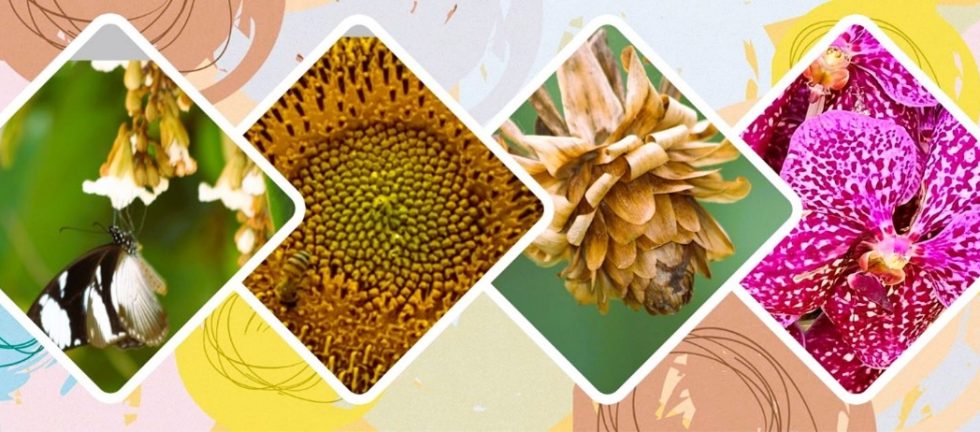
By definition, a flower is the reproductive blossom of a flowering plant, specially designed to produce seeds through pollination and fertilization. Without flowers, many fruits, vegetables, and seeds that humans and animals rely on would not exist. Flowers provide food, spices, medicines, and perfumes. Flowers have both real (biological) and symbolic (cultural and emotional) significance. This is what set my wandering mind going leading to this musing.
Symbolically, flowers are often used to show love and affection, friendship, respect and honour, beauty, the fleeting nature of life, sympathy and remembrance, achievement and success.
Since flowers are everywhere all the time, we tend to take them for granted, yet if we notice them, we will realise how much they affect our lives. Emotionally, flowers often lift people’s moods and are used by some people to express emotions that words alone may not capture. Receiving flowers can make people feel appreciated, loved, or remembered. Psychologists tell us that the beauty of flowers can promote relaxation and create a calming atmosphere. Hence, we see flowers in offices, hotels, hospitals, and public spaces. Artists may tell us that flowers inspire creativity. Who am I to disagree with that?
Environmentally, flowering plants support pollinating insects, improve biodiversity, beautify landscapes and urban environments. Economically, flowers can be a source of employment and income in floriculture, perfumery and cosmetics. Flowers contribute significantly to national incomes of many countries.
Socially, flowers strengthen human relationships during important moments such as births, weddings, funerals and other important ceremonies, communicating care, gratitude, apology, sympathy or appreciations.
Religious symbolism of flowers is found in all religions promoting core beliefs. In Christianity, the passionflower symbolizes the suffering, crucifixion, and sacrifice of Jesus Christ. There are many references to the rose and lilies in both Old and New Testaments of the Bible. Hence it is difficult to muse over flowers without wandering into their role in spirituality.
The Bible mentions flowers many times, both literally and symbolically. They are used to teach God’s care for creation, the beauty of life, the brevity of human existence, and the hope of renewal. Flowers convey spiritual meanings in both the Old and New Testaments of the Bible.
I love the one where Jesus says: “Consider the lilies of the field, how they grow: they neither toil nor spin; yet I tell you, even Solomon in all his glory was not arrayed like one of these.” (Matthew 6:28–29, Luke 12:27–28). The Bible being what it is, this statement can be used by the indolent as an excuse not to work. Religious leaders tell us that Jesus’ statement is to encourage us to trust God rather than be consumed by anxiety over material needs. There are many other references to flowers to remind people that human life is brief. or emphasizing the temporary nature of wealth and status.
The Bible presents flowers as more than decoration. They are teaching symbols. Their beauty encourages gratitude, their short lifespan invites humility, and their recurring bloom points to hope. They remind readers that while earthly beauty fades, God’s love, promises and word endure.
Scholars tell us tell us that while the Qur’an does not speak extensively about flowers by name. it frequently refers to plants, gardens, blossoms, vegetation, and the beauty of creation. Flowers are understood within the Qur’an as signs of the wisdom, power, and mercy of God, even when not explicitly named.
In Hinduism the most sacred flowers are the Lotus (symbol of purity), the Marigold and the Night Jasmine (Parijat).
Although flowers are widely associated with beauty, love, joy and hope, they also have negative aspects, both in a literal (real-world) sense and in their symbolic meanings. This dual nature makes flowers powerful symbols in everyday life.
Physically some flowers can trigger allergies. hay fever, sneezing, itchy eyes or asthma attacks in predisposed people. The symbolism for this phenomenon is that what can delight one person may cause discomfort to another
Apart from causing discomfort, some flowers are poisonous. Many attractive flowers contain toxins making them dangerously poisonous. Examples include Oleander with colourful flagrant flowers but poisonous. Foxglove that is extremely toxic and can cause severe heart problems or death if ingested. The innocent-looking Lily of the Valley flowers can be harmful or fatal if consumed. Datura commonly known as thornapples or jimsonweeds has beautiful but highly dangerous flowers with toxic compounds which can cause severe poisoning, hallucinations, and even death. The symbolism of these flowers is that beauty can be dangerously fatal.
We admire roses for their beauty, but they are protected by sharp thorns. The expression “Every rose has its thorn.” implies that getting close to beauty may come with difficulty or pain. In my blog on Roses, I wrote on how such beauty can come with pain or strife because of the rose plant’s sharp thorns.
Flowers are frequently used to describe human experiences. A child may be called “a blooming flower” because of growth and potential. “Bloom where you are planted” encourages people to thrive wherever they are. Referring to someone as “a fading flower” would be a subtle way of saying that beauty is temporary and age is taking over.
While a fading bouquet may symbolize love that has ended, a broken relationship and heartbreak yet I cannot imagine anyone giving a faded bouquet.
Some flowers are famous not for sweet perfume, but for odours that resemble rotting meat, decaying fish, dung, or other unpleasant smells. These odours attract specific pollinators like flies and carrion beetles instead of bees and butterflies. The names such as Corpse Flower, Dead Horse Arum, Skunk Cabbage given to these flowers are telling.
People who use flowers for symbolism, nasty smelling flowers should remind them that appearances can be deceptive. Flowers that smell unpleasant can symbolize the deceptiveness of appearances that visible beauty does not necessarily reflect inner qualities.
Flowers remind us that appearances can be deceptive. A flower may be outstandingly beautiful with a pleasant scent, yet poisonous, surrounded by thorns or wither quickly like the Morning Glory. Likewise, people may appear charming while concealing harmful intentions. Flowers teach several reflective lessons. They remind us that: beauty is temporary. nothing remains in full bloom forever. Time changes everything.
Flowers are used all over the world to represent sadness when presented as wreathes at funerals or placed on graves symbolizing loss and farewell in respect of the deceased. When all is said and done, flowers are much more than beautiful plants. They are essential for the reproduction of many plant species and for maintaining environments. Symbolically, they represent love, hope, beauty, peace, remembrance, and renewal. Their presence enriches our lives by supporting food production, improving mental well-being, strengthening relationships, beautifying our surroundings, and reminding us of the fragility of life.
Perhaps the greatest lesson flowers offer is totality of life. They embody both: beauty and fragility, joy and sorrow, growth and decay, love and loss, hope and mortality.
Because they bloom, fade, and bloom again with the seasons, flowers remind us that life itself includes periods of flourish as well as decline. Their value is not in longevity, but in the meaning and beauty they bring while they are in bloom. Yet despite their beauty, some can be very dangerous. In that aspect, flowers are like human beings. The flower you pick, metaphorically or in reality, because of its beauty may be your undoing.
In the blog on Rose, I wrote: “A flower called a rose with beautiful colours but devoid of aroma, what kind of a rose is that?” In Luganda it is well put: “Loozi eterina kawoowo, loozi nabaki?” The analogy is the futility of focusing only on physical beauty when choosing partners or companions devoid of good character or personality which are equivalent to the fragrance of a flower.
I love flowers so much that I do not want to see them cut and put in vases. I sniff roses on their stems, watch bees collecting their food from them, go down on my knees to have a close look at a tinny beauty in the grass etc. Because of this I had never given my wife cut flowers and luckily, I do not remember ever receiving cut flowers. I can’t tire photographing them in their natural environment. Visit my website Gallery and see the beauties I have recorded, grown by my wife, in our garden.
Thank you for being part of the Fork in the Road Blogs: Reflections on Life. Be sure to look out for the next episode when I will be writing about Cleverness. If you gathered something useful, please feel free to share the blog. My books, Fork in the Road: Creating a future of value starting from where you are and A view round the bend. Setting goals for your life’s journey are available for purchase at Aristoc bookshops in Kampala, Uganda and online at Amazon.
Your comments on my musings are most welcome and let me know whether there is a topic you would like me to muse over.
Comments (2)
David Kasingwire
Well put. We occasionally hear women being referred to as flowers. With the symbolism highlighted in your writing, I now fully understand women especially from youth hood to adulthood. Thank you.
Stephen Lwanga
Thanks David. Now you know the symbolism of flowers and women. Use it sparingly though.