
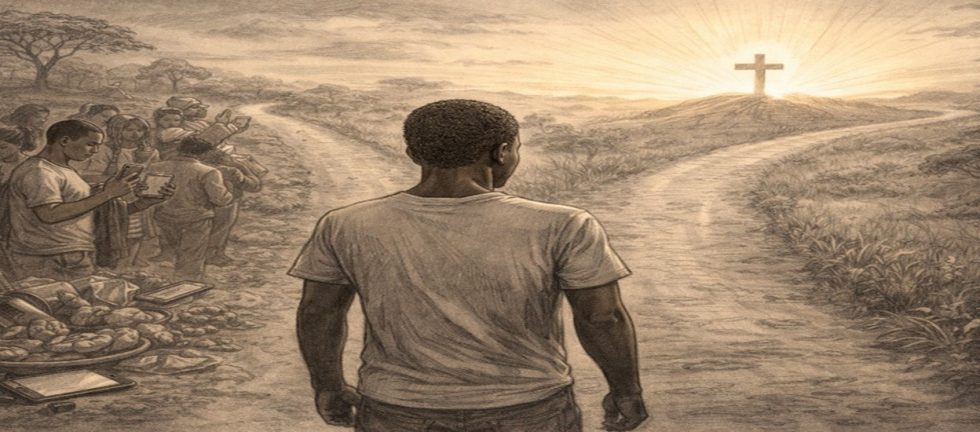
Welcome to the Fork in the Road Blog: Reflections on Life. These are “fireside” musings on the reasonably long life I have lived so far. It is my way of thinking aloud over everyday issues, reflecting on life’s “What”, “Why?” and “How?” and sharing my views with people around me, physically and virtually. The musings are, however, primarily for my wellbeing. They are therapeutic. They keep me mentally alive. The topics I muse over come to me haphazardly triggered by the surroundings or interaction with people or purely out of the blue. The topic “New Year’s resolutions” was suggested by one of the regular readers of my musings.
New Year’s resolutions reflect more about human nature than about specific goals. They are a declaration that life can be improved. I have never heard of a negative new year’s resolution. They arise from reflection on habits we feel are limiting us in being physically or morally better. The timing at the start of the new year is merely symbolic, it has no effective impact. It simply helps to mark the start of the actions we resolve to undertake.
Many resolutions fail because they aim at outcomes (“be healthier,” “be disciplined”) without defined processes (“walk daily,” “sleep on time,” “drink less”). Outcomes or goals require a clear map of the steps and milestones needed not just seriousness. That would be like putting your resolutions in the hands of God to help you achieve them. These are the messages I give in my book “A view round the bend. Setting goals for your life’s journey”
Small, specific, repeatable steps are more enduring than grand leaps. Similarly, a modest resolution, with clear executable steps, practiced consistently often transforms a life more than an ambitious vow abandoned within a short time in the new year. Resolutions that are not well thought through are bound to fail leading to feeling guilty with self-reproach.
New Year’s resolutions are not foolish utterances; they are expressions of human longing for self-improvement. Their value lies less in perfect execution and more in the clarity they bring about. Which is what truly matters. In other words, the mere acknowledgement that some elements of one’s life could be improved is a positive start. Resolutions expose the gap between who we are and who we believe we ought to be. This gap can motivate growth, but when the goals are unrealistic, it can also breed guilt and self-reproach.
New Year’s resolutions, or their cousins made at the dawn of a significant period such as Lent for Christians, should not be merely lists of personal ambitions, but quiet moral commitments. For example, to live healthier, truthfully, responsibly, compassionately etc.
A resolution, in its deepest sense, is an act of integrity for self-assessment not with condemnation, but with humility in recognition that some improvement is needed in one’s life. Hence, resolutions become less about perfection and more about direction.
I believe resolutions fail not because they are unrealistic, but because they are not purposeful. When resolutions are driven by social pressure, comparison, wanting to look like people around you, or conceit, they face the moral challenge of lack of sincerity.
I think a New Year’s resolution, or a resolution on life behaviour, should not be simply a personal promise to change, but an inner pledge to contribute to a better world, maybe through a change in a habit, or being more compassionate to people you have not been noticing (as I mused in “Beyond the merchandize” blog). In other words, resolutions should look beyond ourselves. A morally grounded resolution considers how our actions affect the society we live in: family and community. It asks: Will I be more just? More compassionate? More honest? Will my growth help others grow too? etc.
There is a subtle difference between institutional and individual New Year’s resolutions, even though they share the same underlying idea: intentional change. The difference lies mainly in who decides, who acts, and who is affected.
Individual resolutions are made by one person because of personal reflection, conscience, values, or aspiration often about habits, character, discipline, purpose etc. Institutional resolutions are made collectively (by institution’s governing board or leadership, or collectively by the institution’s members) shaped by mission statements, strategic plans, or external pressures and must balance diverse interests and perspectives. Failure of resolutions made by an individual affects mainly the person while an institutional resolution failure is likely to have a broad impact on, for example, employees and beneficiaries.
Regarding flexibility and adaptability of resolutions, individuals can change course quickly or even abandon or revise a resolution without formal process. Institutional resolutions are not readily flexible and adaptable as they are most likely to be bound by policies, budgets, timelines, and reporting structures. A change requires bureaucratic procedures.
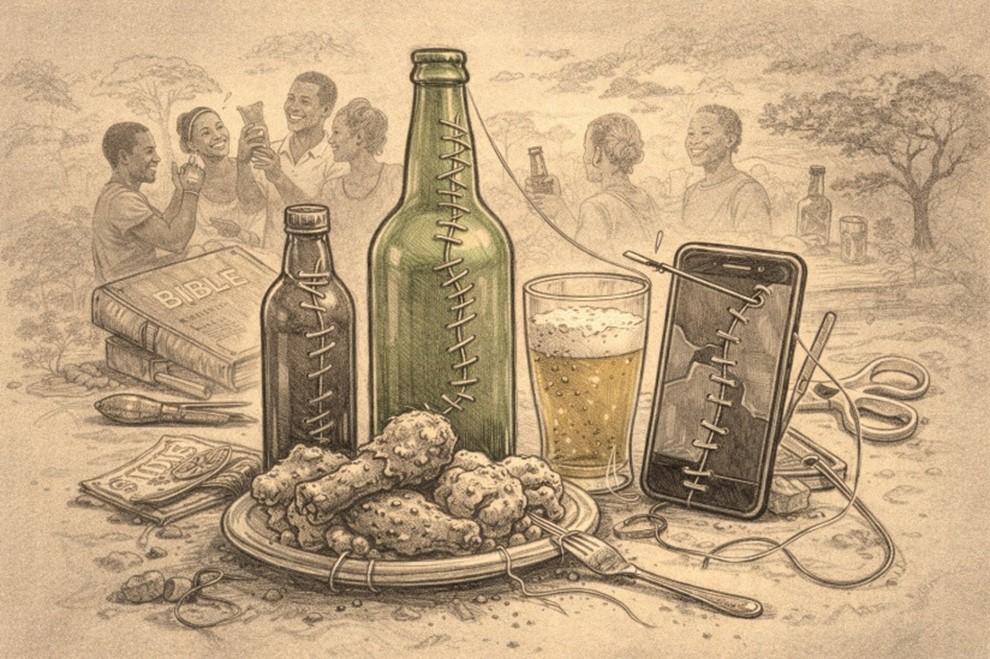
A moral reflection is that an individual’s resolution is often about becoming better whereas an institution’s resolution must be about serving better. For institutions, especially service-oriented ones like civic clubs, NGOs, or faith-based organizations, a New Year’s resolution is not merely symbolic. It is a moral commitment that must pass tests such as the Rotary Four Way Test of whether it is truthful and achievable; whether it will benefit those we serve; whether it will build trust and goodwill; and lastly, whether it will be fair to all stakeholders.
While New Year’s resolutions are not bad, almost by definition, they can come with some common handicaps. One of the handicaps is the all-or-nothing pressure where tough rigid goals are set (such as “I’ll read a book every week” or “I will stop taking sugar”) but when interrupted by unavoidable circumstances, it feels like total failure leading to demotivation. Another handicap is lack of preparation by tagging the resolution to a calendar date forcing change when one is not ready. A third handicap can be being over-ambitious ignoring real constraints like time, money, energy, or mental health. Resolutions like “be healthier” or “be happier” sound good but are devoid of the steps to be followed to achieve them. For example, having resolutions focussing on results (such as slim down by 10 kg, or save ten percent of my income every month) instead of habits and systems (like change in eating habits, or money saving process).
It has been suggested that if resolutions are reframed as trials, intentions, or habit themes, many of these apparent disadvantages would disappear. For example: instead of a resolution such as “I will quit sugar,” rephrase it as “When I feel a craving for sugar, I will look for an alternative.” Instead of making yearly resolutions focus on monthly or seasonal self-assessment. And importantly focus on direction, the process, not achieving perfection.
Having said all that, I confess I do not make New Year’s resolutions or even resolutions for the Lent. I believe in a continuous assessment of what my life needs, not either for a period or in anticipation for the future.
Thank you for being part of the Fork in the Road Blogs: Reflections on Life. Be sure to look out for the next episode when I will be writing about Vigils. If you gathered something useful, please feel free to share the blog. My books, Fork in the Road: Creating a future of value starting from where you are and A view round the bend. Setting goals for your life’s journey are available for purchase at Aristoc bookshops in Kampala, Uganda and online at Amazon.
Your comments on my musings are most welcome and let me know whether there is a topic you would like me to muse over.
Comments (2)
Miriam Nagadya
Hit the nail right on the head with this one Dad. Gave up on NY resolutions long ago
Rtn Stephen
Giving up on NY resolutions should not stop one continually reassessing one’s life for improvement